Creating lasting change with a true impact.
For initiatives where many threads meet and the next step has to be right. Especially now, as AI reshapes how your company works.
AI in value creation
Shape decision-making, roles and leadership so that AI works for your business.
Transformation & change
Set up leadership and collaboration so that change takes hold in daily work.
Products & business models
Take new offerings from the first idea all the way to delighted customers.
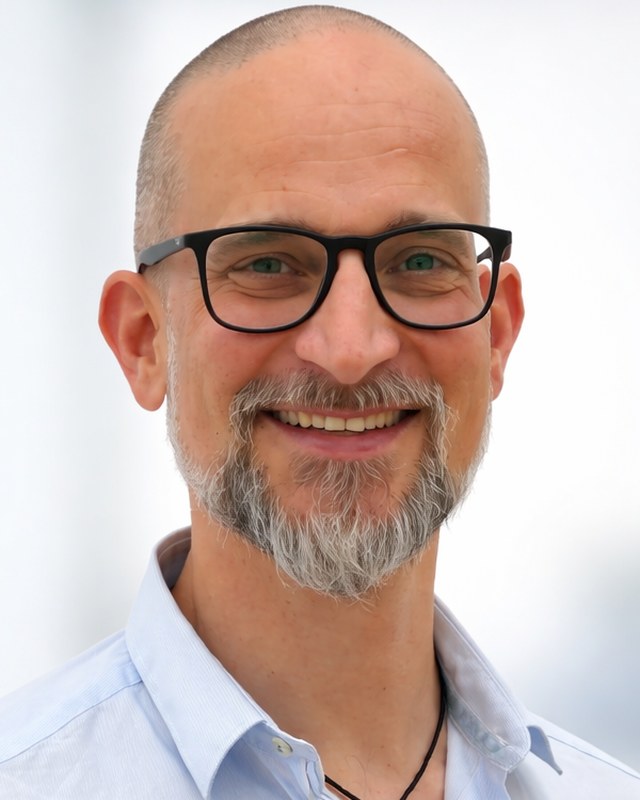
I’m Gerrit Quast, an organizational development consultant. My background is in software development and start-ups, and I have also helped shape change in large corporate units with more than 10,000 people. I have worked with teams in Germany, India, China, Japan and the U.S.
Many people already use AI for their own tasks. The next step is the organization around them.
The biggest gains lie between the tasks.
Between the individual steps sit handoffs, follow-up questions and waiting time. That is the potential AI can tap across the entire workflow.
The data is on the table before the meeting starts.
Decisions become better informed. They can also be made more often, because no one has to gather the numbers across several levels first. That also changes who sits at the table.
Leadership can be redesigned.
When AI takes over routine work, a question comes up: what do you want leadership to be in your organization from now on? Steering AI agents? More time for people? Or a mix of both?
For AI to work for your business, three things have to change with it: who does what, who decides and who is accountable. Together, they make up your operating model. I shape it with you until it runs day to day.
Is this on your mind right now? Send me an email or give me a call.mail@gerritquast.de+49 172 5780230
What your situation calls for right now.
You face a major restructuring where many threads meet.
Many units, many initiatives, and the first attempts are behind you. This is where I start, with a picture everyone shares. Then I ask what can make a real difference.
What slows you down often shows up late.
I look at your organization as a whole and at how goals, responsibilities and governance work together. That way, contradictions come to light while they are still small.
Everyone in the company knows certain patterns, and raising them is hard.
They creep in over time, and changing them hurts. First I ask what the behavior has been good for so far. Then we work out what you need more of, and less of, for the future you want. That way the behavior can be discussed, and no one has to get defensive.
You have to tackle it, and the outcome is uncertain.
Anyone who carries responsibility knows that moment of hesitation. I take it seriously, sort out with you what is realistically possible, and stay with you until the first step is firmly in place.
What I helped build.
In a unit with over 10,000 people, I worked with the executive team to set a real focus and improve how implementation is steered. I helped shape products from the first idea to many cities and markets. Most recently, for a unit of about 800 people across several sites that handles purchasing and payments, I built an AI maturity assessment to define priorities and implementation steps.
-
80 → 20A corporate unit with over 10,000 people: focus on what matters.
Anyone working there at the time split their effort across many initiatives at once. Direction stayed unclear, and change barely took hold. Together with the executive team, we clarified what matters, and roughly 80 initiatives became no more than 20. Afterwards, the teams knew what they were working toward and what success looks like. In your organization, I look early at where goals, budget and responsibilities have come apart, and bring them back together so that implementation moves quickly.
-
15 → 3GoalAutomotive software across several business units: shared building blocks.
Each unit built its own components, and earlier attempts at sharing had already been made. We developed a shared vision for the software in the vehicle of the future and set up a central repository (Warehouse) where units store and reuse their building blocks. This shows which components are in use where, and how often. The goal: to turn 15 software solutions for the same problem into 3. The Warehouse makes that manageable, and the mobility division can direct investment in capabilities based on facts. Teams in India built the Warehouse, and we involved them closely.
-
World firstAutomated Valet Parking: the world’s first driverless parking system with Level 4 approval.
It started with twelve people from different business units and a rough idea, with development in Germany and closely connected sales teams in Asia. I helped shape it from the idea to market entry. In 2019, vehicles with the approval drove at Stuttgart airport with no one at the wheel, right among regular traffic. The system is no longer on the market because the business models did not hold up. On the way from simulation to a model car in the office to real-world operation, we needed a different way of working about every six months, and each time we developed it together. In your organization, I make sure the way of working fits the challenge at hand.
-
2 → 30car2go: from two to 30 cities.
It started with two development teams and software for a single-city pilot. By the end, development was spread across several teams and continents. First we built the product. With every new city, rollout processes, reliability and service operations mattered more and more, and we grew all of it along with the business.
Understand people. Change the system.
When something gets stuck, the cause rarely sits in one place. I look at the people: what drives them, what holds them back, what have they already tried? And at how the work is set up: who decides what, how does information flow, which goals get in each other’s way?
The two are connected. People act sensibly within the conditions they work in, and a pull in one place moves something elsewhere. That is why I usually start with the conditions, with roles, processes and how decisions get made, and clarify the handoffs: who works with whom, on what. That gets things moving, and your organization delivers what it set out to do.
Warm with people, clear on substance.
I listen until the real issue is clear. Then I tell you plainly which options I see, including where it may get uncomfortable. Together we agree where this should go and why. From there, we take the next steps until the change takes hold in daily work.
Is this kind of initiative on your desk?
Then tell me about it. I’ll tell you plainly what I see, and whether I’m the right person for it. If it’s a fit, I come to you. I work on site, mainly in southern Germany and in the countries where your teams are based.
When I leave, things keep running without me.
Whether for a single team or an entire business unit: three things should change along the way.
- ClarityEveryone involved shares one picture of what this is really about and why. And everyone knows who expects what from whom, me included.
- StabilityClear responsibilities and a rhythm of aligning, deciding and delivering. Robust day to day, flexible when things change.
- ImpactEarly results that show up in the business and for customers. And people who take on the next question themselves.
Together we develop a roadmap that adapts as things change. It gives you and your organization direction, makes the next steps clear and shows when results will become visible.
- Business Coach (IHK)
- Transformation Companion (Synnecta)
- Systemic organizational development, change and transformation (isb Wiesloch, in progress)
- Diplom in Media Informatics, focus on software engineering
- Flight Levels
- Objectives and Key Results
- Business Modelling
- Business Culture Design
- Team development